
Is Dallas-Fort Worth on track to become the heart of America’s largest data center market?
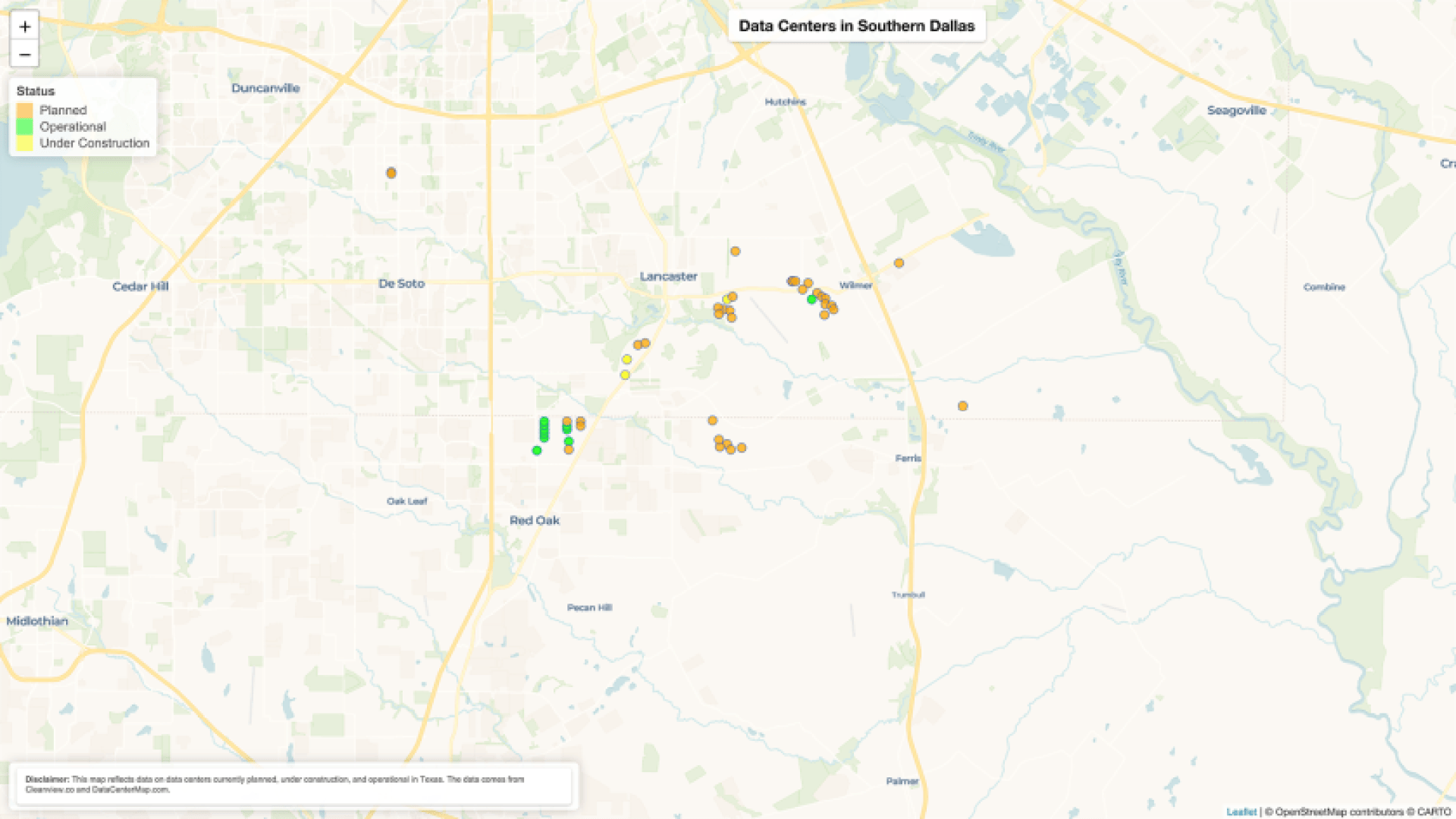
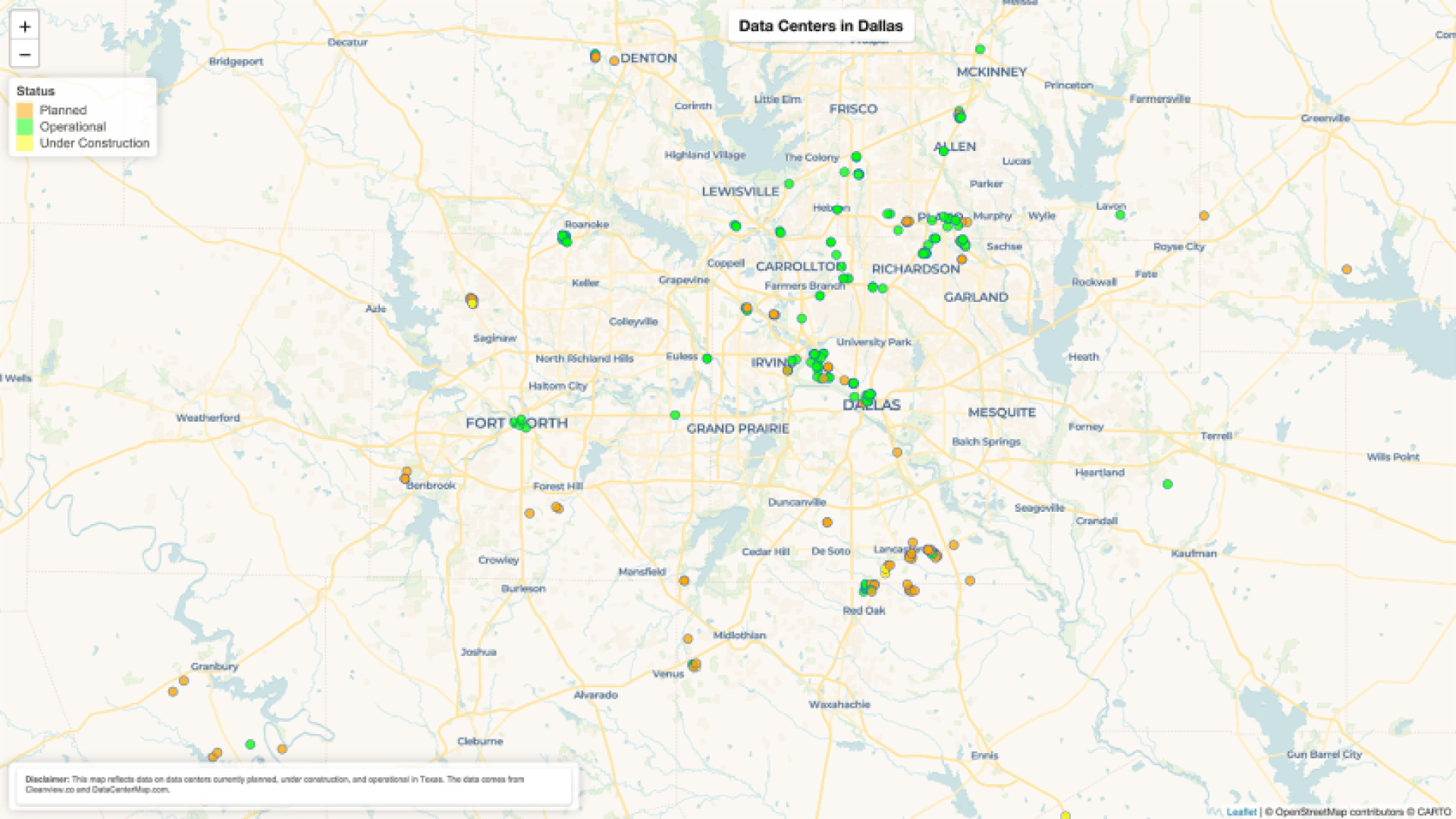
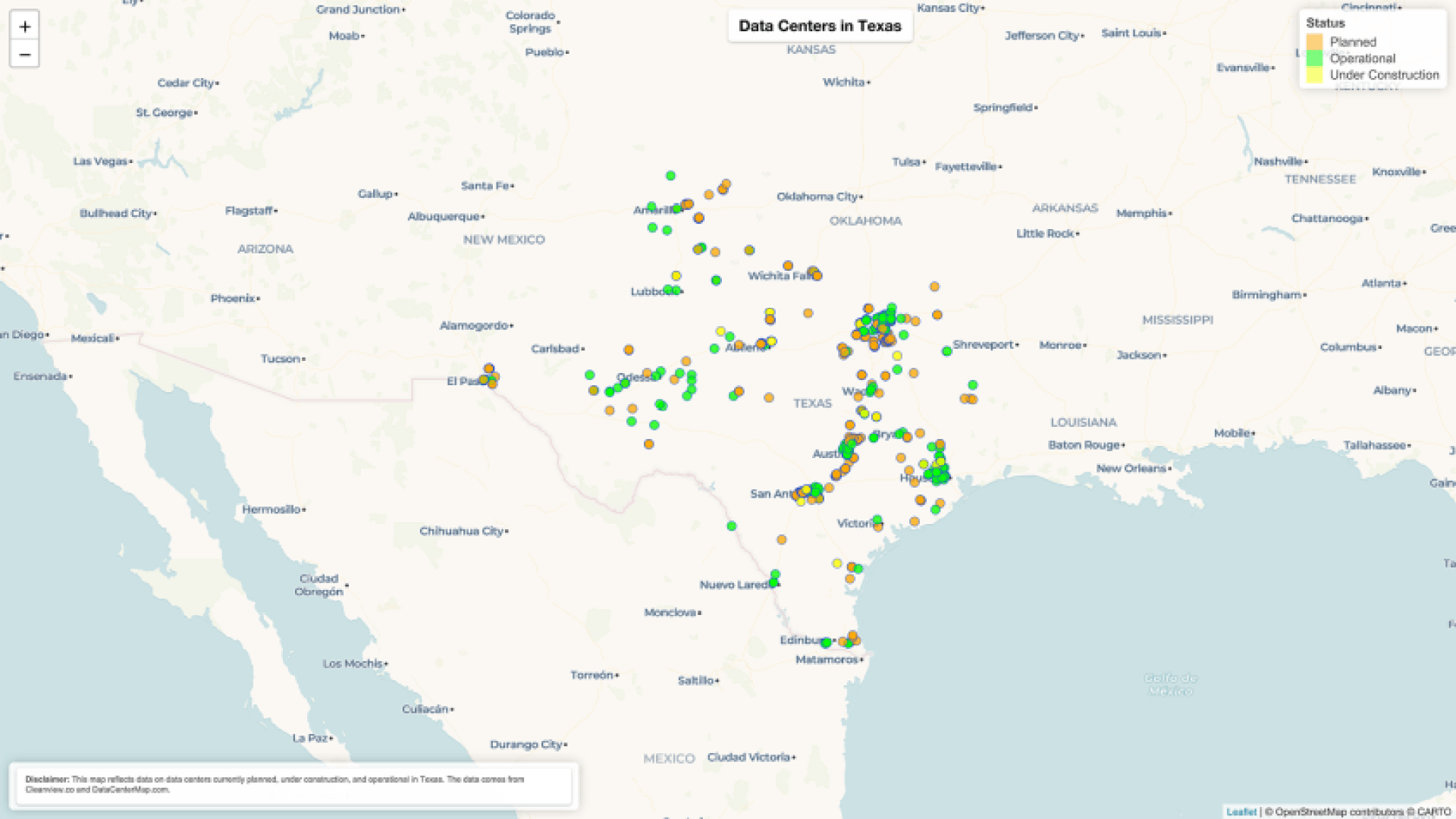
To see what’s happening, NBC 5 Investigates mapped the locations of DFW area data center projects under construction or in the planning pipeline, using data provided by two companies that closely track data center development.
The maps highlight the rapid pace of planned data center growth in the region, and they pinpoint communities – especially south of Dallas – that could see a data center boom. Development experts said the growth in that region is driven largely by access to power and fiber connections. And some believe the area’s growing popularity with developers will propel Dallas to become the anchor of a Texas market with more data centers than any other state.
The development data illustrates how much of the current boom is clustering in three communities south of downtown Dallas running along Interstate 35, and then to the east toward Interstate 45. NBC 5 Investigates created maps using information provided by Cleanview and Datacenter Map, two leading groups that track data center development plans.
In Lancaster, Red Oak and Wilmer, the development data showed 10 data centers currently operating and almost four times as many on the way. Some are under construction; others are proposed sites or projected additions to existing data center campuses.
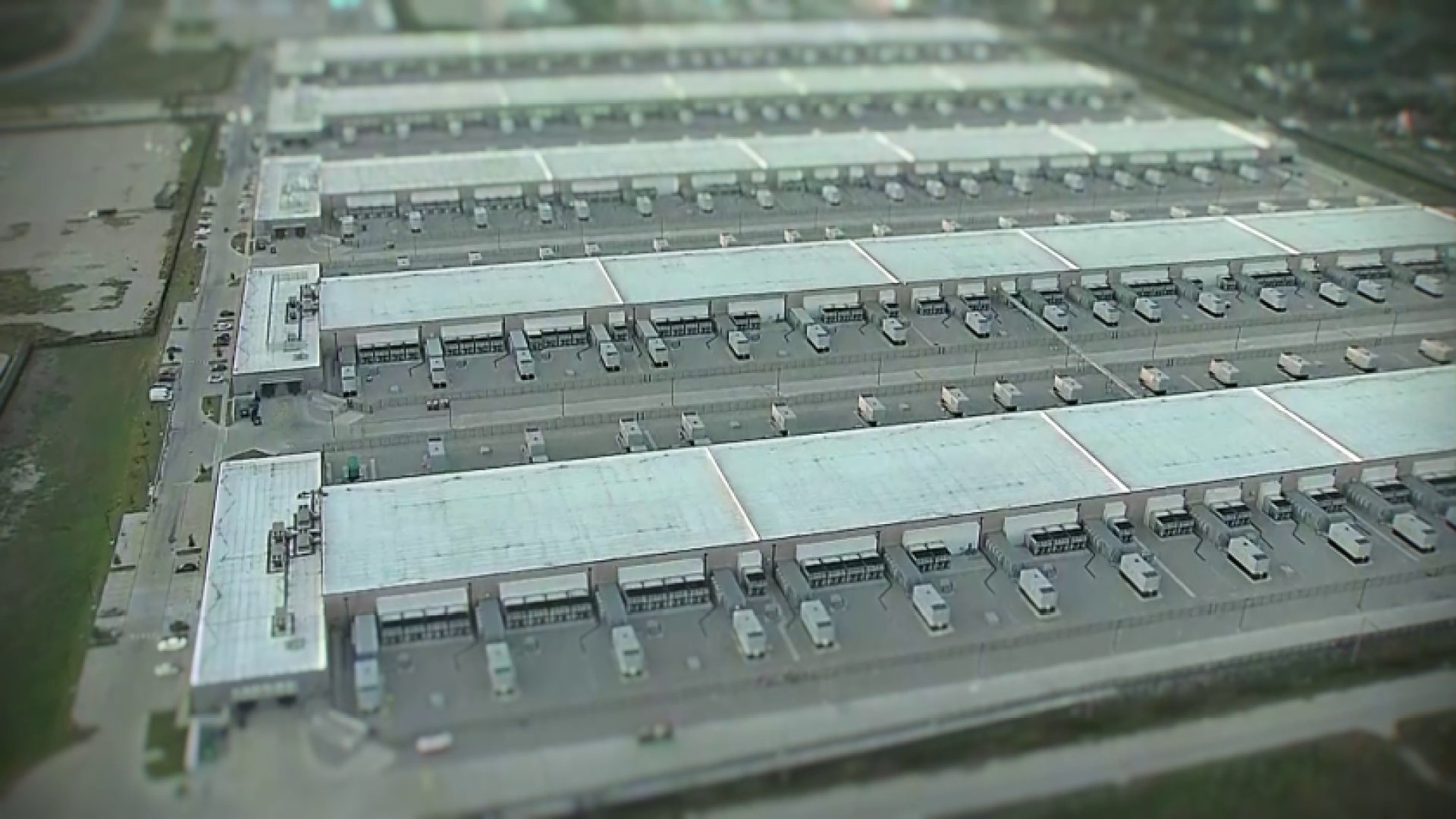
In Red Oak, NBC 5 Investigates‘ mapping of data from the two tracking organizations shows nine data centers currently operating and 14 more in planning or under construction. In Lancaster, three data centers are under construction and 11 more are in the pipeline, while in Wilmer, 11 new data centers are planned on top of one already there.
Analysts who track data center construction told NBC 5 Investigates it’s easy to see why so many developers are drawn to corridors south of downtown Dallas. They cite not only availability of power and major fiber connections, but also momentum created by an already established data center market.
“Everybody wants to be where everybody already is, right? The market has proven to be successful for data center developers and operators. And so that attracts more as well,” said John McWilliams, who studies data center development for commercial real estate giant Cushman & Wakefield.
McWilliams said Dallas is now leading a Texas market that’s on track to overtake Virginia as the nation’s biggest data center location.
“Texas is enormous. It’s got the scale to grow, the room to grow, and facilitate that demand. And Dallas is just kind of the anchor of that,” McWilliams said.

McWilliams said, when measured by the amount of power consumed by data centers, the Dallas market is on pace to nearly double in size in the next three to five years, based on projects under construction. And the pipeline of future proposed projects is even larger, although it’s not guaranteed that all of those projects will be built.
McWilliams recently published a study that ranked the Dallas area as the No. 1 primary data center market, not just in America, but the world.
The report considered factors like power and land availability and the current construction pipeline.
According to developers, several factors position the DFW area for explosive data center growth and explain why more companies have targeted locations in communities just south of Dallas.
“Dallas has always been at the center of fiber connectivity between the West Coast and the East Coast,” said Haynes Strader, chief development officer at Skybox, a Dallas-based data center company that’s building a 100-acre data center campus in Lancaster.
Strader explained early data centers preferred to be close to those major internet connection points. He said the area just south of Dallas also sits at a major electric power intersection between West Texas and North Texas.
“A lot of that power connectivity sits in south Dallas, and so there was a lot of excess capacity for many, many years in south Dallas,” Strader said.
Skybox said it aimed to build in industrial areas, not near homes, and said its data centers contribute millions in tax revenue to cities like Lancaster, where the city council has welcomed data center construction.
Strader believes the Southern Dallas boom will keep booming over the next five to 10 years.
“There’s no better place in the Western world for data centers to live than Texas. You’ve got a massive amount of generation capacity. Tremendously talented workforce,” Strader said.
In communities where data centers are rising from the ground, and more are in the works, some residents wonder what living through a boom will look like.
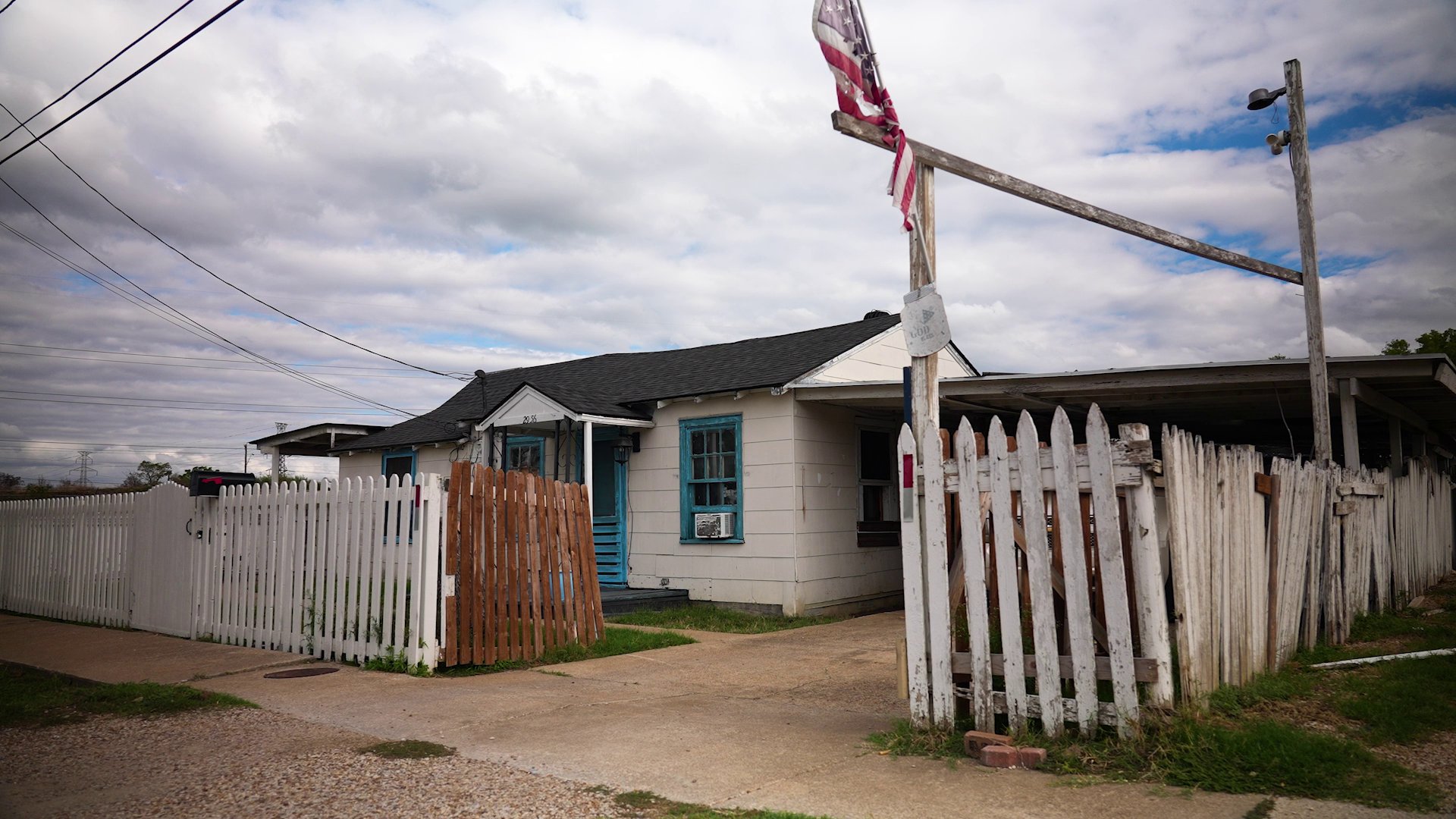
Red Oak resident Chris Villegas told NBC 5 he had no idea he was living in a corridor that was on track for data center growth until he learned on social media about plans for a data center just on the other side of the fence line from his family’s home.
That’s not what he expected when he moved to Red Oak, hoping for a country lifestyle not far from the city.
“We saw tractors driving down the street, lots of just farmland,” Villegas said.

Villegas said he’s not opposed to all data centers but doesn’t think Red Oak needs more, especially near homes. Villegas and his wife helped launch a local group calling for “no more data centers,” along with neighbors like Lacey Hammel, who worry the more data centers built there, the more may follow.
“I feel like if they add all of this, then the land is going to be even more valuable in that regard. So, the growth would seem to just continue unchecked,” Hammel said.
Hammel and Villegas fear years of traffic construction. They worry about noise, new electric lines and how data centers might impact their home values.
“It does make us very concerned of ‘We’re gonna have to shoulder a lot of this.’ A lot of our neighbors’ farms, a lot of our neighbors’ homes, they’re going to be right in the sacrifice zone,” Hammel said.

NBC 5 Investigates reached out to Compass Data Centers, the company planning to build near Villegas’ home, but did not hear back.
In a statement, Red Oak Mayor Mark Stanfill told NBC 5 Investigates, “I understand, no one wants development next to them…”
But Stanfill said the benefits outweigh the concerns, writing, “People have been asking us for years to build parks, fix roads, lower taxes — and data centers are how we get there. A data center is actually a better deal for a city than a giant new neighborhood.”
Texas Gov. Greg Abbott (R) recently put a halt on all state permits for data centers until state regulators complete an audit of all the massive data center projects that want to connect to the state’s electric grid and the Texas Legislature is expected to take up proposals for new data center regulations starting in January.
Those political discussions and potential new rules could ultimately slow the pace of data center growth or impact where data centers are built. But some industry analysts believe the state conversation will ultimately focus more on how to manage the growth, not stopping it.
“So much, so fast, is really what worries me because there’s so much unknowns right now,” Hammel said.